
A pre-roll sold at a smoke shop and a pre-roll sold at a Washington dispensary can test almost identically once they’re lit, yet federal law has treated one as farm produce and the other as a Schedule I drug. Plenty of products sold as “hemp” can get you just as high as anything on a cannabis store shelf. That’s why the line between hemp and marijuana matters more now than it has in years, and why that line is about to move. Understanding hemp vs marijuana used to be trivia. Now it determines what you can legally buy, where you can buy it, and what it can do to you.
Hemp vs Marijuana: Same Plant, Different Legal Label
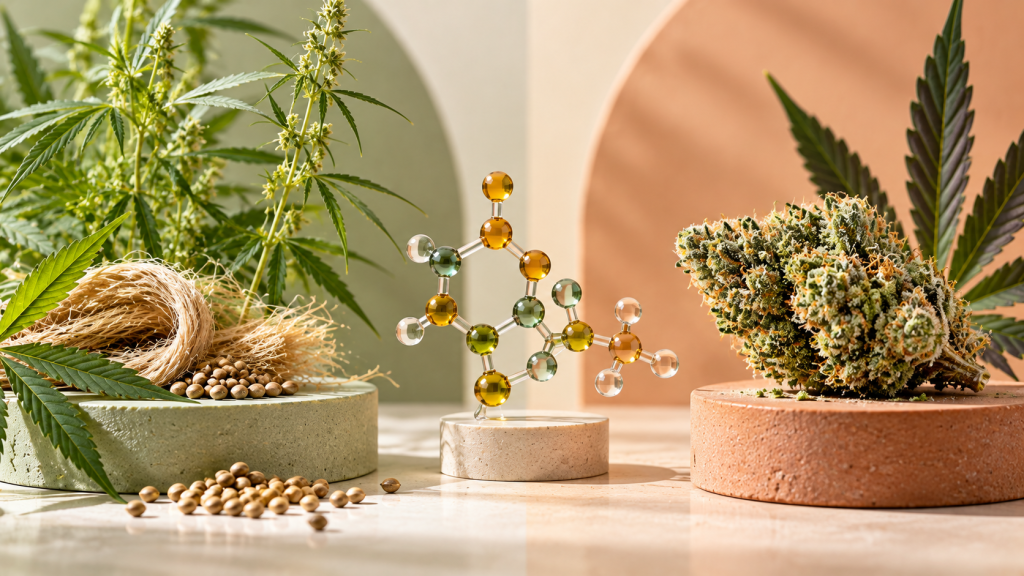
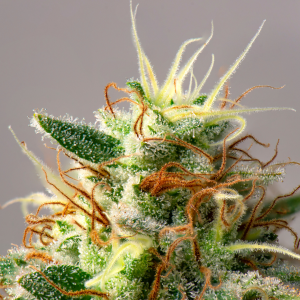
Hemp and marijuana are the same plant. Both are Cannabis sativa L., the same genus and species, and both can grow the same serrated leaves, sticky flowers, and resin glands called trichomes. Put a CBD hemp plant next to a THC-rich marijuana plant, and even an experienced grower might need a lab test to tell them apart.
So when someone asks, “Is hemp the same as weed?” the honest answer is “botanically, yes; legally, no.” Hemp vs marijuana isn’t a comparison between two species. It’s a comparison between two legal categories that describe the same plant bred for different goals. That’s the core difference between hemp and marijuana: chemistry and law, not species.
Why the Line Is Legal, Not Biological
Broccoli, kale, cabbage, and cauliflower are all the same species, Brassica oleracea, shaped by centuries of farmers selecting for different traits. Cannabis works the same way. Growers breed hemp for fiber, seed, or CBD while keeping THC low, and they breed marijuana to load its trichomes with THC. The plants look alike, but their chemistry diverges, and the law uses that chemistry to sort them.
The Public Health Institute’s hemp and cannabis factsheet puts it plainly: hemp is defined by how little intoxicating THC it contains, not by how it looks or where it grows. That definition has real consequences for farmers, shoppers, and anyone trying to read a label.
The 0.3% Delta-9 Rule and Where It Came From
Under the 2018 Farm Bill, hemp became any cannabis plant containing no more than 0.3% delta-9 THC by dry weight. Anything above that threshold is marijuana, which remains a Schedule I drug under the federal Controlled Substances Act. One number decides whether a field is an agricultural commodity or a controlled substance.
That number didn’t come from a medical study about intoxication. It traces back to a 1976 paper by Canadian botanist Ernest Small, who used 0.3% as a rough dividing line for classifying cannabis plants, not as a policy recommendation. Decades later, it became law.
To see how wide the gap really is, compare the numbers. A compliant hemp plant tops out at 0.3% delta-9 THC, while modern dispensary flower commonly tests between 15% and 30% THC. At 20%, a strain carries roughly 67 times the hemp limit. For farmers, the margin is razor thin, since a crop that tests at 0.31% because of heat stress or a delayed harvest can be ordered destroyed. For decades, that sliver of a percentage point was the entire hemp vs marijuana distinction in federal law.
What Hemp Is Grown For
Long before anyone extracted CBD, people grew hemp for practical goods. Its long, tough stalk fibers have held up sails and stitched together work clothes for centuries, and today they end up in rope, textiles, paper, and building materials like hempcrete. People press its seeds into oil or eat them whole as a protein-rich food. The market is growing fast, too. U.S. hemp production was worth $739 million in 2025, up 64% from 2024, according to the USDA’s National Agricultural Statistics Service, and the USDA’s Agricultural Research Service continues to study new uses for the crop, from animal feed to industrial materials.
The hemp vs marijuana plant comparison becomes visible in the field. Industrial hemp grown for fiber and seed looks a little different from flower-focused cannabis. It’s often planted densely, grows tall and thin, and produces relatively few flowers. Hemp grown for CBD, on the other hand, is bred for big, resinous buds, which is exactly why it can look nearly identical to marijuana.
When “Hemp” Can Still Get You High
Can hemp get you high? Traditional hemp won’t. The trace delta-9 THC in a CBD tincture or a hemp seed is far too low to produce intoxication. Over the last several years, however, a loophole in how the 2018 law measured THC created an entire market of intoxicating hemp products, and plenty of shoppers bought them without realizing what they were. In the hemp vs marijuana conversation, that’s the detail most people miss.
Hemp THCA Flower vs Dispensary Flower
The 2018 definition focused on delta-9 THC. Living cannabis, however, mostly produces THCA, the non-intoxicating precursor that turns into THC when it’s heated. A flower can contain very little delta-9 THC while carrying 20% or more THCA. Light it up, and that THCA converts into the same THC found in dispensary flower.
As a result, “hemp THCA flower” sold online or at smoke shops can be chemically indistinguishable from marijuana once it’s smoked. The difference comes down to oversight. Dispensary flower undergoes state-required testing for potency and contaminants, and its label reports total THC, which includes THCA and delta-9. Hemp THCA flower has often been sold with far less testing and labeling that highlights only the low delta-9 figure.
Delta-8 and Other Intoxicating Hemp Products
Delta-8 THC occurs naturally in cannabis only in tiny amounts. Most delta-8 products are made by chemically converting hemp-derived CBD into an intoxicating cannabinoid in a lab. Because the starting material came from legal hemp, sellers argued the finished product was legal too. Similar logic produced gummies, vapes, and drinks containing THC-O, HHC, and other converted cannabinoids, often with inconsistent testing.
The 2026 Hemp Definition and Total THC
Congress moved to close those loopholes in November 2025. The spending bill that became Public Law 119-37 rewrote the federal hemp definition in three important ways, as summarized in this legal analysis from Frier Levitt:
- It replaces the delta-9-only standard with a total THC standard that counts THCA, delta-9, and delta-8
- It excludes cannabinoids synthesized outside the plant or not naturally produced by it, which covers most delta-8 and HHC products.
- It caps finished hemp-derived consumer products at 0.4 mg of total THC per container.
The total THC hemp law matters because it brings THCA into the count, which redraws the hemp vs marijuana line around what a product can actually do once it’s heated. Under the new definition, a high-THCA flower no longer qualifies as hemp, so it’s treated as marijuana under federal law. Industrial hemp grown for fiber and seed remains exempt.
The changes were originally scheduled to take effect on November 12, 2026. In September, Congress voted to push that date to December 11, 2026, and further changes are still possible before the deadline arrives.
What 0.4 mg Per Container Means
That per-container cap is tiny. For comparison, a single standard THC gummy in a dispensary often contains 5 or 10 mg, which is 12 to 25 times the new limit for an entire hemp package. Even many non-intoxicating products would fail the test. Industry groups estimate that the large majority of full-spectrum CBD products, which keep trace THC on purpose, would exceed 0.4 mg per container.
If you use CBD for wellness, you’ll likely see a shift in what’s available outside dispensaries. THC-free isolate and broad-spectrum products should remain on general retail shelves, while full-spectrum CBD and anything intoxicating moves into the regulated cannabis market. Our post on full spectrum vs broad spectrum CBD breaks down how those extract types differ.
How Washington Already Handles It
Washingtonians got a preview of this shift. In 2023, the state passed SB 5367, which treats consumable products with any detectable THC as cannabis products and counts all forms of THC, not just delta-9. In practice, THCA flower, delta-8 products, and full-spectrum CBD with trace THC belong in licensed cannabis stores, while THC-free CBD can still be sold elsewhere. The federal change brings much of the country closer to the line Washington already draws.
Where Hemp and Marijuana Stand Legally Today
Put the pieces together, and the hemp vs marijuana legal status looks like this as of fall 2026. Hemp that meets the federal definition is legal to grow and sell nationwide, though states can add their own restrictions. Federally, marijuana is still Schedule I, even though Washington voters legalized adult-use cannabis through Initiative 502 in 2012 and many states have since built their own programs.
The practical upshot depends on where you live and what you’re buying. In Washington, an adult 21 or older can legally buy marijuana flower, edibles, and concentrates from a licensed retailer, and that same adult can pick up THC-free CBD at a grocery store. What they shouldn’t find outside a licensed store, under state law, is anything with detectable THC. After December 11, federal law is set to push states without rules like Washington’s in a similar direction, at least for intoxicating hemp.
Travel adds another wrinkle. Because marijuana is still federally illegal, carrying it across state lines, through airports, or onto federal land breaks federal law, even when you’re traveling between two legal states. Hemp-derived CBD that meets the federal definition doesn’t carry the same risk, but a high-THCA “hemp” flower soon won’t qualify as hemp at all.
Hemp CBD vs Marijuana CBD
The hemp vs marijuana question gets especially muddy with CBD. Is CBD from hemp different from CBD from marijuana? At the molecular level, no. Cannabidiol is the same molecule whichever plant produces it, and your body processes it the same way. The difference is everything that comes along with it.
A hemp-derived CBD isolate might contain nothing but CBD. A full-spectrum extract from marijuana, by contrast, could pair that CBD with a meaningful dose of THC, along with terpenes and minor cannabinoids that shape the experience. Two bottles with the same CBD number on the front can feel completely different depending on that supporting cast.
Quality is the other big variable. When researchers tested 84 CBD products sold online, a study published in JAMA found that only about 31% were accurately labeled for CBD, and roughly one in five contained THC that wasn’t listed. At Commencement Bay Cannabis, the CBD and THC products on our shelves go through regulated lab testing, and our budtenders can walk you through what’s actually in each one.
Why a State-Licensed Dispensary Cuts Through the Confusion
For most shoppers, the hemp vs marijuana debate isn’t really about botany or federal definitions. It’s about knowing what’s in the product you’re holding. That’s where the retail setting matters more than the plant source.
A state-licensed dispensary operates under rules that general retailers don’t. Every batch undergoes state-required lab screening for potency and contaminants like pesticides, heavy metals, and mold. Labels list total THC, so THCA can’t hide behind a low delta-9 number. Staff check ID, which keeps intoxicating products away from kids. And when the rules change, as they will again in December, licensed stores are built to adapt without leaving customers guessing.
The plant is the same either way. The law, testing, and labeling are what change. Once you know that hemp vs marijuana comes down to how much THC a product carries, and that the federal measuring stick is switching to total THC, you can read any label with a lot more confidence. Check the total THC line, look for a lab report, and treat the word “hemp” as a starting point for questions rather than a promise about how a product will feel.