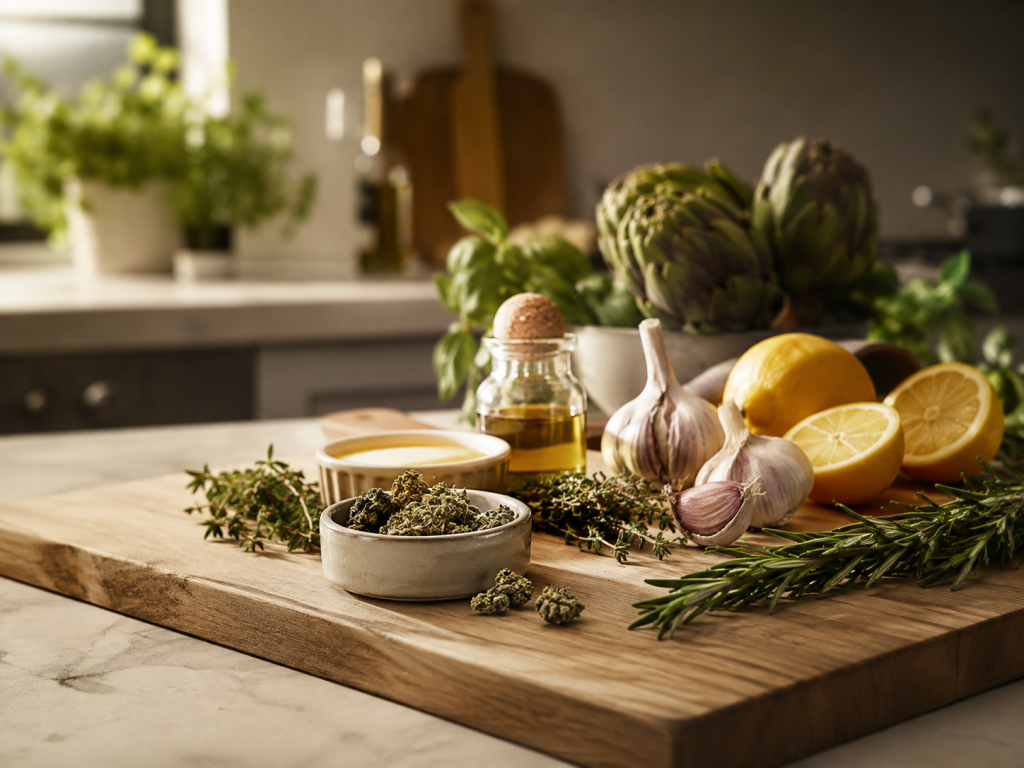

Roughly 90% of the THC in raw cannabis flower is locked in a form your body can’t use until heat activates it. That single fact explains why so many first-time edible makers end up with brownies that do nothing at all. They skip a step, get discouraged, and assume homemade edibles just don’t work. They do work. You just have to start in the right place.
This cannabis cooking guide starts where most others fail to: decarboxylation. Once you understand why this step matters, everything else, from cannabutter to infused oils to your favorite weeknight recipes, starts to make a lot more sense.
What Decarboxylation Is and Why Skipping It Ruins Edibles
Raw cannabis contains THCA, a non-intoxicating compound. THCA only converts into THC, the compound responsible for the high, when it’s exposed to heat over time. This chemical conversion is called decarboxylation, or “decarbing” for short.
Think of it like this: raw flour and eggs sit in your kitchen without doing much of anything until you bake them into a cake. Cannabis works the same way. If you toss ground flower straight into a batch of brownie batter without decarbing it first, you’re baking with mostly inactive compounds. The brownies might smell like weed and taste like weed, but they won’t get you high, or at least not in any predictable or useful way.
This is the number-one mistake beginners make, and it’s also the easiest to fix.
How to Decarboxylate Cannabis at Home
Decarboxylation isn’t complicated, but temperature and timing both matter. Here’s a reliable method:
Preheat your oven to 240°F. Break your cannabis flower into small, roughly even pieces by hand, then spread it out in a single layer on a parchment-lined baking sheet. Bake for 40 to 45 minutes, giving the tray a gentle shake around the halfway mark so nothing scorches. The flower should turn a light golden brown and smell toasty rather than sharp or burnt.
Low and slow is the goal. Cranking the heat higher to save time might feel efficient, but it burns off terpenes and can degrade the THC you’re trying to activate in the first place. Once your flower has cooled, it’s ready to be infused into butter, oil, or any fat-based ingredient.
Cooking with THC: The Basics Every Beginner Needs
Cannabis cooking for beginners really comes down to one core idea: THC is fat-soluble, not water-soluble. That means it binds to butter, oil, and other fats far more effectively than it does to water-based liquids. This is why so many cannabis recipes start with an infused fat rather than raw flower stirred directly into a dish.
It’s also why simmering matters. Infusing cannabis into butter or oil isn’t a quick five-minute process. The mixture needs low, steady heat over a couple of hours so the cannabinoids have time to fully bind to the fat molecules. Rushing this step, much like rushing decarboxylation, leaves potency on the table.
One more thing worth knowing upfront is that not all cannabis behaves the same way once it’s cooked. Some strains carry stronger, earthier flavors that come through in the final dish, while others are milder and blend more easily into sweet or savory recipes.
Choosing the Right Strain for Your Cannabis Cooking Guide
Strain selection affects both flavor and effect, so it’s worth a little thought before you start cooking. A strain heavy in myrcene, for example, tends to bring a musky, earthy note that works well in savory dishes like sauces or roasted vegetables, while citrus-forward strains can complement desserts nicely. If you’re newer to edibles or sensitive to strong effects, starting with a strain you already know how your body responds to is smarter than experimenting blind.
If you want a deeper breakdown of how different strain types affect flavor, texture, and potency, our guide on understanding cannabis strains: indica vs. sativa vs. hybrid is a solid next stop before you start cooking.
How to Make Cannabutter Step by Step
Homemade cannabutter is made by first decarboxylating cannabis, then gently infusing it into butter. Because homemade edibles can vary widely in strength, use a small amount and label the finished butter.
What You’ll Need
- 1 cup unsalted butter
- 1 cup water
- 7–10 grams cannabis flower, ground coarsely
- Medium saucepan
- Cheesecloth-lined fine-mesh strainer
- Heat-safe container or jar
- Kitchen thermometer
- Oven-safe dish, if the cannabis has not already been decarboxylated
Instructions
1. Decarboxylate the cannabis
If your cannabis is not already decarboxylated, place the coarsely ground flower in an oven-safe dish. Heat it at approximately 230°F–240°F for 30–40 minutes. Allow it to cool slightly before using.
Decarboxylation activates the cannabis compounds, including THC, so the flower can produce effects when eaten.
2. Melt the butter
Add the butter and water to a medium saucepan. Heat over low heat until the butter melts completely.
The water helps reduce the chance of scorching and makes it easier to maintain a gentle cooking temperature. It will be separated from the butter later.
3. Add the cannabis
Stir the decarboxylated cannabis into the melted butter until it is evenly distributed.
4. Infuse gently
Maintain a gentle simmer for approximately 2–3 hours, stirring occasionally. If using a thermometer, aim for roughly 160°F–190°F.
Do not let the mixture reach a rolling boil or overheat. The cannabinoids gradually dissolve into the butterfat during this stage.
5. Strain the mixture
Place a cheesecloth-lined fine-mesh strainer over a heat-safe container. Carefully pour the mixture through the strainer.
Press the plant material gently to release the liquid, but avoid squeezing it aggressively. Hard squeezing can force more bitter-tasting plant material into the butter.
6. Chill the butter
Refrigerate the strained liquid for several hours, or until the butter has become completely solid. The butter will rise to the top while the water settles underneath.
7. Separate and store
Lift the solid butter from the container and discard the water. Pat the underside of the butter dry if necessary, then place it in an airtight container.
Label it clearly as cannabis-infused butter and store it in a locked, child-resistant location, separate from ordinary food.
Potency Reminder
Seven to 10 grams of flower in 1 cup of butter can produce very potent edibles. The final strength depends on the flower’s THC percentage and how efficiently the cannabinoids are extracted, so homemade cannabutter cannot be dosed precisely without laboratory testing.
Use a small, measured amount in food. For someone with little or no edible experience, starting with approximately 2.5 mg THC or less is the cautious approach. Wait several hours before taking more, since edible effects can be delayed and long-lasting. Avoid combining cannabis with alcohol, and do not drive after consuming it.
Cannabutter Troubleshooting Tips
If your cannabutter turns out weaker than expected, the issue is usually one of two things: the flower wasn’t decarbed long enough, or you cut the simmer time short. If it tastes overly herbal or bitter, you may have simmered at too high a temperature. A kitchen thermometer can help here, since keeping the mixture between 160°F and 200°F protects both flavor and potency.
Cannabis-Infused Oil Recipe: An Alternative to Butter
Not every recipe calls for butter, so that cannabis-infused oil can be a useful alternative. Olive oil, coconut oil, avocado oil, and other food-safe oils can work well. Choose an oil based on how you plan to use it: olive oil suits savory dishes, while coconut oil works well in baked goods and recipes that benefit from a firmer texture when chilled.
What You’ll Need
- 1 cup food-grade oil
- Decarboxylated cannabis flower, ground coarsely
- Medium saucepan or double boiler
- Cheesecloth-lined fine-mesh strainer
- Heat-safe container or jar
- Kitchen thermometer
Instructions
1. Decarboxylate the cannabis
If the cannabis has not already been decarboxylated, heat the coarsely ground flower in an oven-safe dish at about 230°F–240°F for 30–40 minutes. Allow it to cool slightly before adding it to the oil.
2. Combine the oil and cannabis
Add the oil and decarboxylated cannabis to a saucepan or double boiler. Stir gently until the flower is evenly distributed.
3. Infuse over low heat
Heat the mixture gently for approximately 2–3 hours, stirring occasionally. If using a thermometer, aim for roughly 160°F–190°F.
Do not let the oil reach a rolling boil or smoke. A double boiler makes it easier to maintain a steady temperature and reduces the risk of overheating.
4. Strain the oil
Pour the mixture through a cheesecloth-lined fine-mesh strainer into a heat-safe container. Press the plant material gently to recover the oil, but avoid squeezing it aggressively, since this can add more bitter-tasting plant material to the finished product.
5. Cool and store
Allow the oil to cool, then transfer it to a sealed, clearly labeled container. Store it according to the oil’s normal storage requirements, protected from heat and light. Keep it locked and away from children and pets.
Choosing an Oil
- Olive oil: Works well in salad dressings, pasta, sauces, dips, and roasted vegetables. Its flavor suits savory recipes best.
- Coconut oil: Useful in baked goods and recipes that benefit from a solid fat. Unrefined coconut oil may have a noticeable coconut flavor; refined coconut oil is milder.
- Avocado oil: Has a relatively mild flavor and works well in dressings, sauces, and other recipes where you want less olive-oil flavor.
- MCT oil: Remains liquid and has a mild flavor, but it may not be suitable for high-heat cooking and can cause digestive upset for some people.
Potency Reminder
One cup of oil combined with 7–10 grams of cannabis can produce a very strong infusion, depending on the flower’s THC percentage and how efficiently the cannabinoids transfer into the oil. Homemade infused oil is difficult to measure precisely without laboratory testing, so use a small, measured amount and wait several hours before taking more.
Also, avoid combining cannabis with alcohol, do not drive after consuming it, and label the container clearly so it cannot be mistaken for ordinary cooking oil.
Using Your Infused Oil in Everyday Cooking
One of the best parts of having infused oil on hand is how ordinary it can make edibles feel. A drizzle over popcorn, a swap in your usual vinaigrette, or a spoonful stirred into scrambled eggs turns a routine meal into something with a little extra kick, without requiring a whole new recipe.
Cannabis Infused Recipes to Try First
Once you have cannabutter or cannabis-infused oil, you can use it in many recipes that already contain butter or oil. For beginners, the easiest options are usually recipes that require little modification and can be divided into clearly measured portions.
The most important step is to calculate the approximate THC content of the infused butter or oil before adding it to food. Homemade infusions can vary in strength, so do not assume that every teaspoon or tablespoon contains the same amount of THC as a commercial product. When possible, start with a low amount, approximately 2.5 mg THC or less and wait several hours before consuming more.
Brownies and Other Baked Goods
Brownies are a familiar starting point because the recipe typically uses butter or oil, making the substitution straightforward. Their strong chocolate flavor can also help balance the herbal taste of cannabis.
When making brownies:
- If you’re unsure of the potency, replace only part of the regular butter or oil with infused butter or oil.
- Mix the infused ingredient thoroughly into the batter so the cannabis is distributed evenly.
- Divide the finished brownies into equal pieces before serving.
- Keep track of the estimated THC amount in the entire batch and the number of portions.
The infused fat does not have to make up the recipe’s entire fat content. For example, using half regular butter and half cannabutter can make it easier to moderate the strength while preserving the recipe’s usual texture.
Infused Pasta
Infused pasta is a simple savory option, particularly when using olive oil. Toss a measured amount of infused olive oil with cooked pasta, garlic, herbs, grated cheese, roasted vegetables, or a light sauce.
For more consistent portions, mix the infused oil into the entire dish rather than drizzling an unmeasured amount onto individual plates. Divide the finished pasta into equal servings before eating.
Avoid using infused oil for deep-frying or prolonged high-heat cooking. Lower-heat applications, such as stirring it into a finished sauce or tossing it with warm pasta, make it easier to avoid overheating and to portion the oil accurately.
Salad Dressings
Salad dressing is another beginner-friendly option because it does not require additional cooking. Combine infused olive oil with vinegar or lemon juice, mustard, herbs, salt, and pepper to make a simple vinaigrette.
You can prepare a dressing in a batch, but portioning still matters. Measure the amount of infused oil used in the recipe, estimate the total THC and divide the dressing into equal servings. Store it in a clearly labeled container and shake it well before serving, since oil-based ingredients can separate.
Other Easy Options
Other recipes that work well with infused butter or oil include:
- Garlic bread or herb butter.
- Mashed potatoes or roasted vegetables.
- Pesto made with infused olive oil.
- Popcorn tossed with a measured amount of infused butter.
- Oatmeal or yogurt mixed with a carefully measured amount of infused oil.
- No-bake energy bites made with nut butter and a measured amount of infused coconut oil.
Coconut oil can work especially well in baked goods, no-bake treats, and recipes where a solid fat is useful. Unrefined coconut oil may add a noticeable coconut flavor, while refined coconut oil usually has a milder taste.
Cooking with THC: Tips for Storage and Safety
A few practical habits go a long way once your infused butter, oil, or finished edibles are ready. Store cannabutter and infused oils in airtight containers in the refrigerator, where they’ll typically stay potent for a couple of weeks, or freeze them for longer storage if you’re not planning to use them right away.
Labeling matters more than people expect, especially in households with kids or roommates who might not know a batch of butter is infused. A clearly marked container in the fridge takes two seconds and prevents a genuinely dangerous mix-up. Finished edibles like brownies or cookies generally last about a week at room temperature, or up to two weeks refrigerated, though flavor and texture tend to hold up best within the first several days.
Cooking with THC tips like these might seem small on their own, but together they’re what separate a one-off kitchen experiment from a habit you can actually rely on. Once decarboxylation, infusion, and dosing all click into place, homemade edibles stop feeling like a gamble and start feeling like just another recipe in your rotation, one you control from start to finish.