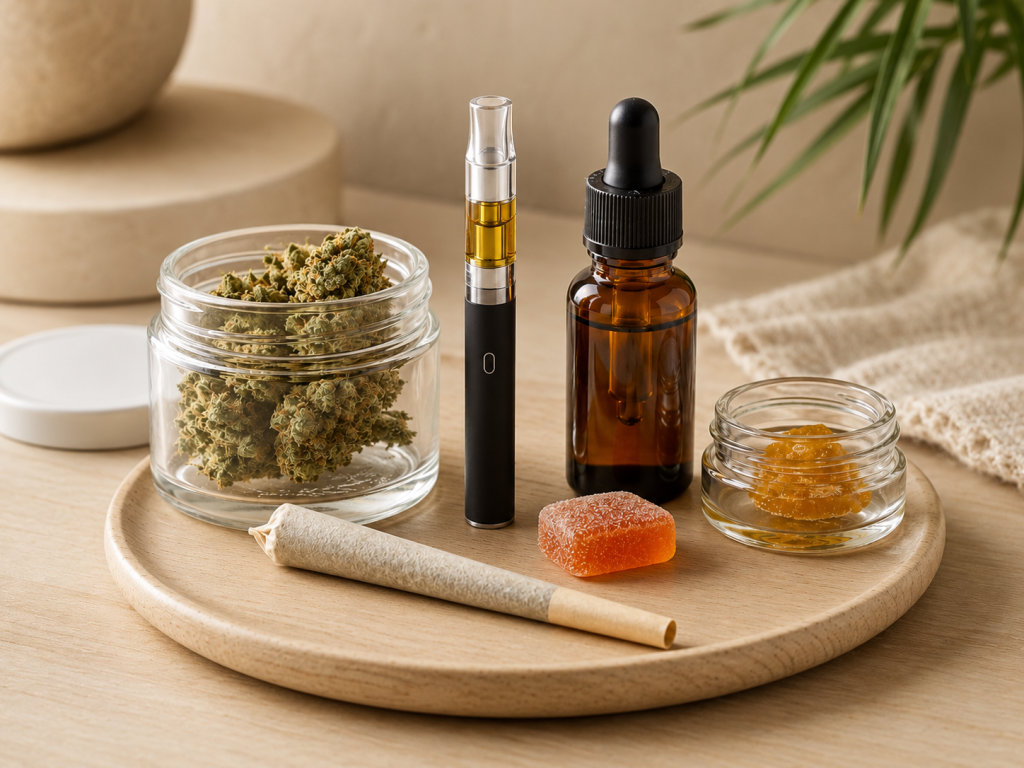

A single gram of flower can be smoked in a joint, vaporized in a pen, baked into a cookie, dropped under your tongue, or rubbed onto sore knees, and each version will hit your body in a completely different way. The method you choose changes everything: how fast it works, how long it lasts, and even how strong it feels compared to the dose on the label. That’s why understanding cannabis consumption methods matters just as much as understanding the product itself.
Most people default to whatever method they tried first, often without realizing how many other options exist or why one might suit them better. This guide breaks down the major cannabis consumption methods available today, what happens in your body with each one, and how to figure out which approach actually fits your goals.
Why Consumption Method Changes Everything
Cannabis compounds like THC and CBD reach your bloodstream through different paths depending on how you take them, and each path has its own speed and intensity. Inhaled cannabis, whether smoked or vaporized, reaches your lungs and enters your bloodstream almost immediately, which is why effects show up within minutes. Ingested cannabis, on the other hand, has to travel through your digestive system and get processed by your liver first, a journey that can take an hour or more before you feel anything at all.
This difference isn’t a minor technicality. It’s the reason someone can eat a cannabis gummy, feel nothing after twenty minutes, eat a second one out of impatience, and then get hit with the effects of both at once. Knowing how different methods of using cannabis interact with your body helps you avoid exactly that kind of miscalculation.
Smoking: The Classic Cannabis Consumption Method
Smoking is still the most recognizable of all cannabis consumption methods, and for good reason. It’s simple, it requires minimal equipment, and the effects arrive fast, usually within a few minutes of your first inhale. Rolling papers, pipes, and bongs all fall into this category, and each changes the experience slightly through filtration and airflow.
The tradeoff is combustion. Burning plant material creates smoke that contains tar and other byproducts, similar in principle to tobacco smoke, which is part of why so many consumers eventually explore alternatives. Still, for someone who wants quick, controllable effects and values simplicity over anything else, smoking remains a reliable starting point.
Onset, Duration, and Who It’s Best For
Smoked cannabis typically takes effect within 5 to 10 minutes and peaks around 30 minutes later, with effects tapering off over the next one to three hours. This fast onset makes it easier to dose accurately, since you can gauge how you feel after a few minutes and decide whether to continue. It suits people who want flexibility and immediate feedback rather than a slow buildup they have to wait out.
Vaping as a Cannabis Consumption Method
Vaping heats cannabis flower or concentrate to a temperature that releases cannabinoids as vapor rather than smoke, avoiding combustion entirely. Many consumers switch to vaping specifically because it feels smoother on the throat and lungs, though it’s worth noting that “smoother” doesn’t automatically mean risk-free.
Vape pens using 510-thread cartridges have become especially popular because of their convenience. There’s no grinding, no rolling, and no lingering smell clinging to your clothes afterward. Dry herb vaporizers, which heat actual flower instead of oil, appeal to people who want the vaping experience without moving away from whole-plant product.
Onset time for vaping mirrors smoking closely, usually within a few minutes, which makes it one of the more predictable cannabis consumption methods for people who’ve already built some tolerance and know their limits.
Edibles: Ingestion Over Inhalation
Edibles work through your digestive system rather than your lungs, and that single difference explains almost everything unusual about how they feel. Once THC is absorbed and processed by your liver, it converts into a compound called 11-hydroxy-THC, which crosses into the brain more efficiently than inhaled THC does. This is part of why edibles often feel stronger and more sedating than smoking the same amount of flower.
Gummies, chocolates, baked goods, and infused beverages all fall under this category, and dosing is typically measured in milligrams printed right on the package, which makes portion control far more precise than eyeballing a joint. The catch is patience. Effects can take anywhere from 45 minutes to two hours to show up, and they tend to last four to six hours once they do.
Cannabis Inhalation vs Ingestion: What Changes in Your Body
The core difference between cannabis inhalation vs ingestion comes down to timing and intensity. Inhalation delivers cannabinoids almost directly into the bloodstream through the lungs, producing fast, shorter-lived effects. Ingestion routes everything through the digestive tract and liver first, producing a delayed but often stronger and longer-lasting result. Neither is objectively better. They’re suited to different situations, whether you need quick relief before an activity or effects that last through an entire evening.
Tinctures and Sublingual Use
Tinctures occupy a middle ground between inhalation and edibles. These liquid extracts are typically dropped under the tongue, where blood vessels absorb cannabinoids directly, bypassing much of the digestive process that slows down edibles. Full-spectrum tinctures and CBD-specific formulas both fall into this category, giving users flexibility depending on whether they want THC effects, CBD benefits, or a blend of both.
Sublingual vs Oral: Why the Difference Matters
Holding a tincture under your tongue for 30 to 60 seconds before swallowing lets some cannabinoids absorb sublingually (through the tissue under the tongue), while the rest is swallowed and processed like a typical edible. This hybrid absorption is why tinctures tend to have a faster onset than gummies, often 15 to 45 minutes, while still offering some of the extended duration that comes with ingestion. Swallowing a tincture immediately without holding it under your tongue skips the sublingual route entirely and behaves more like a standard edible.
Topicals: Localized Relief Without a High
Topicals, including creams, balms, and lotions infused with cannabis, are applied directly to the skin and absorbed locally rather than entering the bloodstream in any meaningful way. That means most topicals won’t produce a high at all, making them a popular option for people managing soreness, joint pain, or skin irritation who specifically want to avoid intoxicating effects.
Pain relief creams and CBD balms are common examples, and they’re often used by people who tried smoking or edibles for physical discomfort but preferred something that worked without altering their headspace. Topicals also tend to appeal to older consumers or those managing chronic conditions who want the anti-inflammatory properties of cannabis without any psychoactive component.
Capsules: A Measured, Discreet Option
Capsules function almost identically to edibles in terms of how they’re processed by the body, since they’re swallowed and absorbed through digestion. What sets them apart is precision and discretion. Each capsule contains an exact, pre-measured dose, removing the guesswork of cutting a gummy or brownie into portions.
They’re also flavorless and easy to travel with, which makes them a practical choice for medical patients or anyone who wants consistent dosing without thinking about it. Onset time is similar to edibles, generally 45 minutes to two hours, with effects lasting four to six hours.
Dabbing and Concentrates: The Fastest, Strongest Route
Dabbing involves vaporizing a concentrated cannabis extract, like shatter, wax, or live resin, at high temperatures using a specialized rig. Because concentrates carry a much higher percentage of THC than flower, sometimes 60 to 90 percent compared to flower’s typical 15 to 25 percent, the effects hit fast and hit hard.
This method isn’t usually recommended for beginners. The intensity can catch even experienced consumers off guard, and the equipment involved has a steeper learning curve than a simple pipe or vape pen. That said, for experienced users seeking maximum potency and near-instant onset, dabbing remains one of the most efficient cannabis consumption methods available.
Choosing the Best Way to Take Cannabis for Your Needs
There’s no single best way to take cannabis, only the method that fits a particular goal, tolerance, and lifestyle. Someone managing chronic pain during the day might lean on a topical that won’t interfere with work, while that same person could switch to an edible or tincture in the evening for deeper relief and better sleep. A person trying cannabis for the first time is usually better off starting with something low-dose and slow, like a tincture or a small edible, rather than diving straight into concentrates.
For anyone still figuring out how to consume cannabis for beginners, the safest approach is starting low and waiting long enough to feel the full effect before taking more, especially with anything ingested. Our budtenders walk new customers through this decision constantly, and matching method to lifestyle tends to matter more than matching method to potency alone.
Cannabis Consumption Methods Pros and Cons at a Glance
Smoking offers speed and simplicity but involves combustion byproducts.
Vaping offers a smoother experience with similarly fast onset but requires equipment and maintenance.
Edibles and capsules offer precise dosing and long-lasting effects but demand patience and carry a higher risk of overconsumption if rushed.
Tinctures offer flexible, adjustable dosing with moderate onset speed. Topicals offer targeted relief with no psychoactive effects.
Dabbing offers maximum potency and speed but comes with a steeper learning curve and stronger effects than most casual users need.
Weighing these tradeoffs against your own routine, tolerance, and reason for using cannabis in the first place is really the whole exercise. Once you know what each method does inside your body, choosing between them stops being a guessing game and starts feeling like a normal part of self-care.