
A gram of shatter can contain more total THC than an entire eighth of flower, depending on how strong the flower is. That one fact explains a lot of the intimidation factor around concentrates, and a lot of the confusion too. New consumers hear the word dab and picture something extreme, when in reality concentrates are just cannabis products that have been processed to isolate and concentrate certain compounds from the plant.
So what are cannabis concentrates, really, and how do you use one without feeling like you need a chemistry degree? Here’s the rundown, from how they’re made to which type makes sense for someone who’s never tried one before.
What Are Cannabis Concentrates?
Cannabis concentrates are products made by extracting cannabinoids, and often terpenes, from the cannabis plant while removing much of the plant material. What’s left is a more potent product that can range widely in texture, strength, and flavor depending on how it was made.
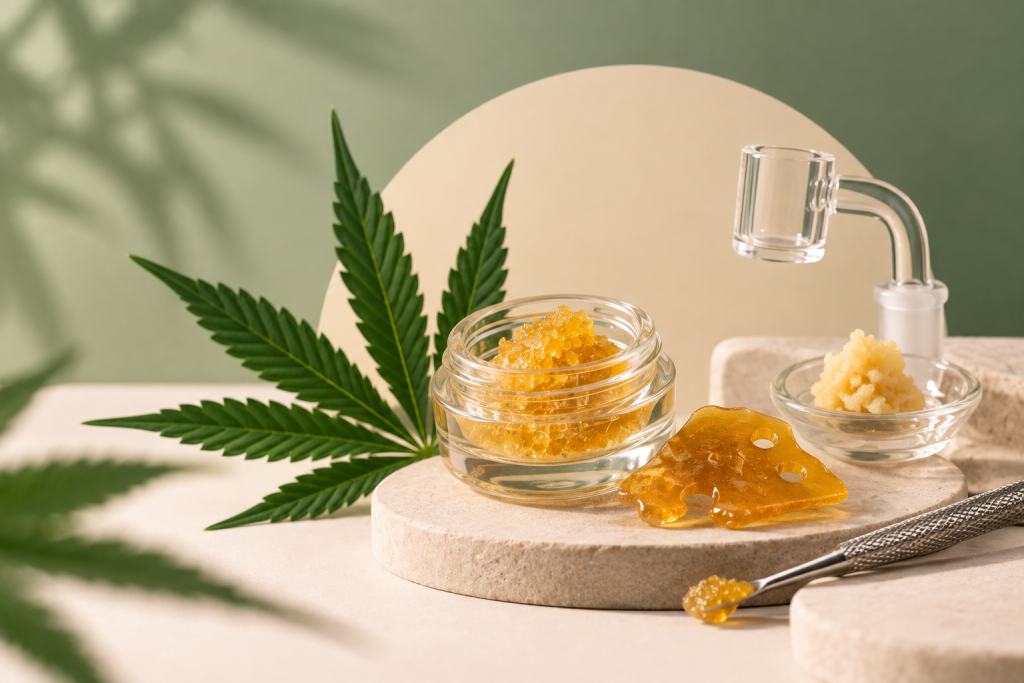
That includes everything from thick oils and soft waxes to brittle shatter and solventless rosin. Some concentrates are terpene-rich and flavorful, while others are heavily refined and much more stripped down, especially products like distillate. That range is a big part of why concentrates are their own category.
How Cannabis Concentrates Are Made
Most concentrates fall into two broad categories based on how they’re extracted: solvent-based and solventless.
Solvent-based extraction uses a chemical solvent, most commonly butane or CO2, to separate cannabinoids and other desirable compounds from the plant material. In butane extraction, often called BHO or butane hash oil, the solvent passes through the cannabis material and pulls out the target compounds before being purged away in a closed-loop system. CO2 extraction uses pressurized carbon dioxide instead and is often used to make oils, vape inputs, and distillate.
Solventless extraction skips chemical solvents entirely and relies on heat, pressure, or mechanical separation. Rosin is the clearest example: cannabis flower or hash is pressed between heated plates until the resinous oil comes out. Ice water hash, often called bubble hash, is made by agitating cannabis in cold water so the trichomes separate from the plant material and can be collected with screens or mesh bags.
Wax, Shatter, Rosin, and Live Resin
This is where most people start to get lost, so here’s the simple version.
Shatter and wax both come from solvent-based extraction, usually BHO, but they’re processed differently after extraction. Shatter is purged and cooled into a glass-like sheet that breaks or snaps apart, while wax is whipped or agitated into a softer, opaque, crumbly texture. Both can be very potent, but the exact THC percentage depends on the starting material and how the final product is tested.
Live resin is another solvent-based concentrate, but it starts with fresh-frozen cannabis instead of dried and cured flower. Freezing the plant right after harvest helps preserve more of its original terpene profile, which is why live resin often smells and tastes closer to the living plant than concentrates made from cured material.
Rosin is the solventless version many people like for its simpler process. It can be made from flower or hash, and when it starts with fresh-frozen material that has first been turned into ice water hash, it’s called live rosin. That extra step usually makes live rosin more labor-intensive and lower-yield, which is why it often costs more.
Budder, Sugar, and Crumble
Budder has a soft, whipped consistency, closer to frosting or creamed butter than a hard shatter. It’s made through solvent-based extraction, usually BHO, then whipped or agitated during purging to create that light, creamy texture. It’s often easy to scoop and handle, which makes it a pretty approachable concentrate for newer consumers.
Sugar and crumble are two other solvent-based textures that fall somewhere between wax and shatter. Sugar has a wet, granular look, almost like damp sugar crystals, while crumble is drier and more brittle. These textures can be terpene-rich, but the exact profile depends on the strain and how the product was made. Crumble is especially easy to sprinkle over a bowl, which is part of why it’s such a common topping option.
Sauce
Sauce is a thick, sticky concentrate with a texture closer to syrup than a solid wax or shatter. It’s often made by separating terpene-rich liquid from THCA crystals during the extraction process, then keeping them together in a way that emphasizes flavor and aroma. That makes sauce one of the more flavorful concentrate styles, but it’s also sticky enough that you usually want a dab tool for clean handling.
Live Resin vs. Live Rosin
The names sound almost the same, but the process is different. Live resin uses fresh-frozen plant material and a solvent, usually butane, to make the extract. Live rosin also starts with fresh-frozen material, but it’s first turned into ice water hash and then pressed with heat and pressure, without solvents.
That difference matters because it changes both the production process and the final character of the product. Live resin is often very terpene-rich and flavorful, while live rosin is usually prized for being solventless and having a clean, full-flavor profile. Either one can be excellent; the choice mostly comes down to preference, price, and how the product was made.
Cured Concentrates
Where live resin and live rosin start with fresh-frozen plant material, cured concentrates are made from flower that’s been dried and cured before extraction. That curing process changes the flavor and aroma profile, often giving it a more mellow, classic character compared with the brighter terpene profile of live extracts.
A lot of non-live products fall into this bucket, including many standard extracts and distillate-based products. The exact result depends on the starting material and how much refinement happens during processing.
Cannabis Concentrates vs. Flower
Concentrates are usually much more potent than flower, but potency is not the whole story. A gram of concentrate at 75 percent THC contains far more THC than a gram of flower at 20 percent THC. That is why concentrates often feel much stronger, even if you only use a tiny amount.
Still, potency alone does not determine the experience. Terpenes, how you consume the product, your tolerance, and the size of the dose all play a role. The better way to think about concentrates is efficiency: they let you use less material to reach a stronger or faster effect than flower usually provides.
How to Use Cannabis Concentrates
There are a few realistic ways to use concentrates, and none of them require becoming a dab rig expert overnight.
Dabbing
Dabbing is the method most people picture when they hear the word concentrate. A small amount of wax, shatter, rosin, or resin is placed on a heated surface inside a dab rig, which is a specialized water pipe. The concentrate vaporizes on contact, and you inhale the vapor through the rig.
Traditional dabbing uses a torch to heat the nail or banger, while e-nails heat electronically and let you control the temperature more precisely. Lower-temp dabs, usually in the 450 to 550 degree range, tend to preserve more flavor and feel smoother. Higher temperatures can hit harder but may taste harsher and burn off some of the terpene character.
Vaping
For many newer consumers, vaping is the easiest entry point. Distillate is a highly refined concentrate that often tests very high in THC and is commonly used in 510-thread cartridges. Those cartridges screw onto a battery and let you inhale without using a torch or rig.
Because distillate is usually stripped of most natural terpenes during processing, manufacturers often add terpenes back in afterward to improve flavor and create a more familiar cannabis profile. That makes vape cartridges one of the most convenient ways to try concentrates without diving straight into dabbing.
Topping Flower
Topping flower is probably one of the gentlest starting points. It just means adding a small piece of wax, shatter, rosin, or hash on top of a bowl or into a joint before lighting it. You get a clear potency boost without needing new gear, which makes it a nice bridge for someone who already smokes flower.
Edibles and Infusions
Concentrates aren’t limited to inhalation. Distillate and isolate are common choices for homemade edibles and infusions because they’re neutral in flavor and easy to dose into oils or butter. Some people also use live resin or other full-spectrum extracts this way if they want a fuller cannabinoid and terpene profile in an edible instead of a stripped-down distillate.
This route skips inhalation altogether, which makes it appealing for anyone who wants the potency of a concentrate without dabbing or vaping.
Are Cannabis Concentrates Safe?
When purchased from a licensed, tested source, concentrates are typically screened for contaminants such as pesticides, residual solvents, and heavy metals. The biggest safety issue for most consumers is not the product itself — it’s dosing. Because concentrates are so much more potent than flower, it’s easy to take too much if you’re used to bowl-sized amounts.
That’s why starting with a very small amount matters so much. With concentrates, a little can go a long way, and your tolerance may not match the THC percentage on the label.
Best Concentrates for Beginners
If you’re new to concentrates, it usually makes sense to start with the least intimidating option. Topping a bowl or joint with a small amount of rosin, wax, or live resin is one of the easiest ways to experiment, since the method feels familiar and you can control the dose by adding just a little at a time.
A vape cartridge is another approachable step because it removes the torch, nail, and rig from the equation. You can take one small puff, wait, and decide whether you want more. That makes cartridges a popular choice for people who want concentrate effects without a big learning curve.
If you do want to try dabbing itself, start low and slow. A low-temperature dab and a very small amount — about the size of a grain of rice or even less — is the standard beginner move for a reason. You can always take more later, but you can’t undo too much.
Storage and Handling
Concentrates can degrade faster than most people expect if they’re not stored properly. A few basics help keep them fresher longer:
- Keep concentrates in a cool, dark place away from direct sunlight and heat, since both can break down cannabinoids and terpenes over time.
- Use airtight, non-stick containers, usually glass or another stable material, to help prevent sticking and preserve quality.
- Always use clean dab tools when handling concentrates, since their sticky texture makes them easy to contaminate with dust, lint, or debris.
FAQ
What is the difference between wax, shatter, and rosin?
Wax and shatter are usually solvent-based concentrates that differ in texture and post-processing, while rosin is made without solvents using heat and pressure.
Do concentrates have terpenes?
Yes, though the amount varies widely. Live resin and live rosin usually preserve more terpenes than heavily refined products like distillate.
What is the difference between concentrate and dabs?
Concentrate is the product category. A dab is the act of vaporizing a small amount of concentrate on a heated surface, usually with a dab rig.
Do concentrates get you higher?
Usually yes, because they contain much more THC than flower. The exact experience still depends on dose, terpene content, tolerance, and how you use it.
What is a solventless concentrate?
A concentrate made without chemical solvents, using heat, pressure, or mechanical separation. Rosin, live rosin, and hash are all examples.
Concentrates are not really a separate world from flower so much as a more concentrated version of it. Once you know the vocabulary, the category gets a lot less intimidating, whether you start by topping a bowl, trying a cartridge, or working up to your first dab.